Resume Screening Checklist for Recruiters | Faster Shortlisting
A practical checklist recruiters can use before and during resume review to define must-haves, avoid inconsistent screening, and build stronger shortlists.
Resume Screening Checklist for Recruiters
Use this checklist before you open the first resume and while reviewing every candidate. It helps you screen faster without changing the bar from one applicant to the next.
- Confirm must-have skills before screening begins.
- Separate required criteria from preferred keywords.
- Define red flags and follow-up questions.
- Use the same criteria for every candidate.
- Record evidence instead of gut feel.
- Decide whether each candidate should move forward, be held, or be rejected.
Why Use a Resume Screening Checklist?
A resume screening checklist helps recruiters review candidates consistently before interviews. Instead of relying on memory or scanning resumes in a different way each time, the checklist gives every applicant the same first-pass evaluation.
That matters most when applicant volume increases. A checklist helps hiring teams move faster, reduce bias from inconsistent review, and build shortlists that hiring managers can understand.
Complete Resume Screening Checklist
- Confirm the candidate meets the role's non-negotiable requirements.
- Check role-relevant experience, not just total years of experience.
- Look for evidence of impact, ownership, or measurable outcomes.
- Review must-have skills and separate them from nice-to-have keywords.
- Check whether the candidate has worked in a similar domain, team size, or problem space.
- Look for progression, scope, and responsibility across roles.
- Flag gaps, short tenures, unclear responsibilities, or missing requirements for follow-up.
- Compare candidates against the same scoring rubric before creating a shortlist.
- Document why a candidate should move forward, not just whether they should.
Step 1: Define Must-Have Criteria Before Reviewing Resumes
The fastest resume screening starts before the first resume is opened. Recruiters and hiring managers should agree on the few requirements that truly matter for the role. If every line in the job description is treated as equally important, screening becomes slow and inconsistent.
- Which skills are required from day one?
- Which experience can be learned after joining?
- Which qualifications are legally or operationally required?
- Which signals are nice to have but should not block a strong candidate?
- Which gaps should trigger a follow-up question instead of rejection?
Step 2: Use Evidence, Not Keyword Presence Alone
A resume can include the right keywords without showing meaningful evidence. Strong screening asks whether the candidate has actually used the skill, solved a similar problem, or delivered an outcome that matters for the role.
For example, instead of only checking whether a sales candidate mentions CRM, look for pipeline ownership, quota attainment, deal size, sales cycle, market segment, and measurable results.
Step 3: Score Candidates Against a Simple Rubric
A resume screening checklist becomes more useful when it connects to a scorecard. For each candidate, score the most important criteria and capture a short evidence note. This helps recruiters compare applicants instead of reading every resume as a one-off opinion.
- 5 = strong evidence against a must-have criterion.
- 3 = partial or unclear evidence that needs follow-up.
- 1 = weak evidence or missing requirement.
- N/A = not relevant to this role or not visible in the resume.
Step 4: Separate Screen-Out Criteria From Interview Questions
Not every uncertainty should remove a candidate from consideration. Some questions are better handled in a recruiter screen or hiring manager interview. A good checklist separates true screen-out criteria from items that simply need validation.
- Screen out: legally required certification missing.
- Screen out: no evidence of a must-have technical skill.
- Follow up: unclear ownership of a project.
- Follow up: career gap that may have a simple explanation.
- Follow up: adjacent experience that could still transfer well.
Step 5: Build a Shortlist Recruiters Can Explain
The output of resume screening should not just be a list of names. It should be an explainable shortlist. Hiring managers should be able to see why each candidate was included, what evidence supports the decision, and which questions still need validation.
Example Resume Screening Checklist for Recruiters
- Role fit: Does the resume show experience close to the actual job?
- Must-have skills: Are the required skills clearly demonstrated?
- Impact: Does the candidate show measurable outcomes or meaningful scope?
- Seniority: Does the level match the role expectations?
- Stability and progression: Does the career path make sense for this role?
- Communication: Is the resume clear enough to understand responsibilities and results?
- Risks: What must be validated before moving forward?
- Recommendation: Move forward, hold, reject, or request hiring manager review.
How AI Can Help With Resume Screening
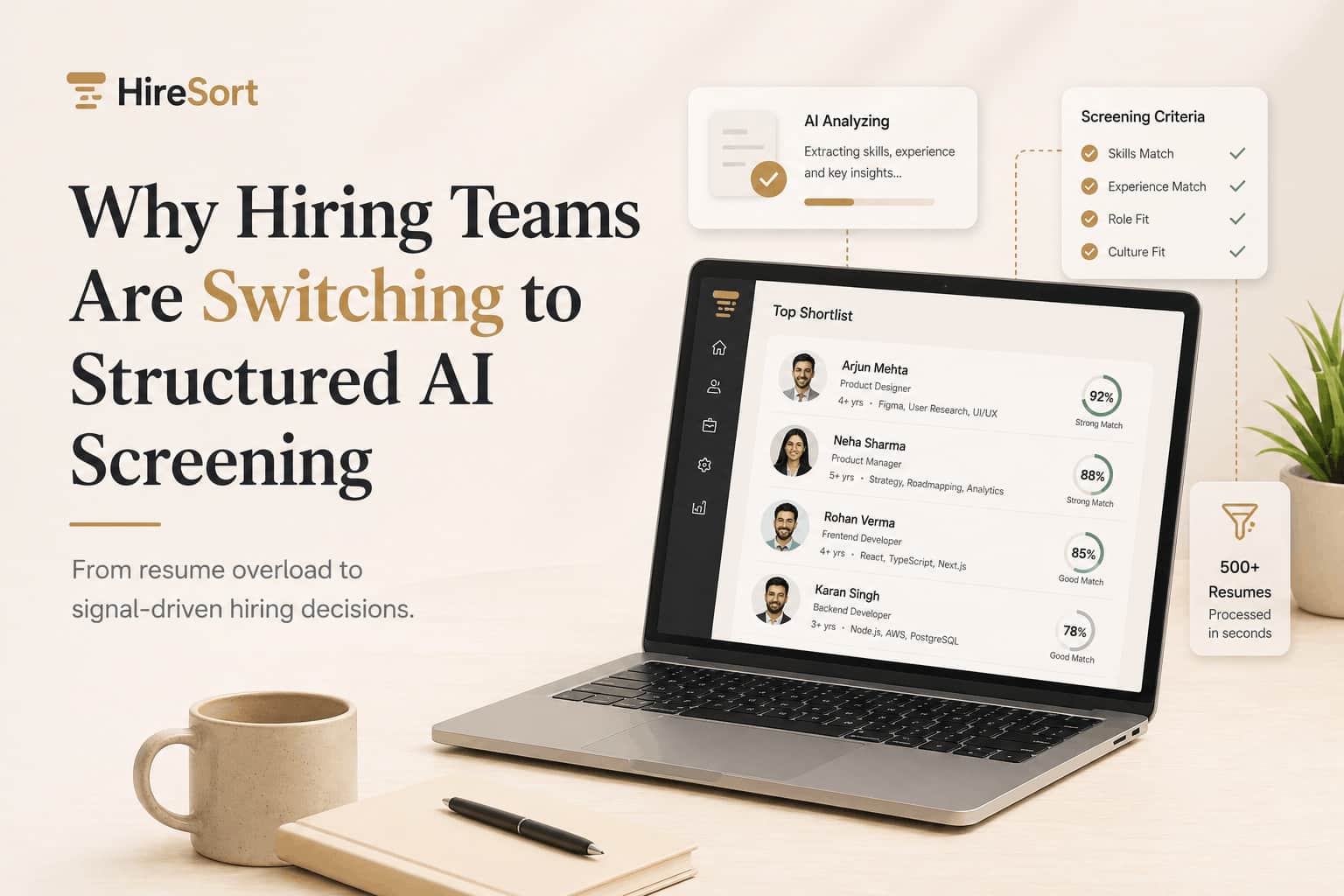
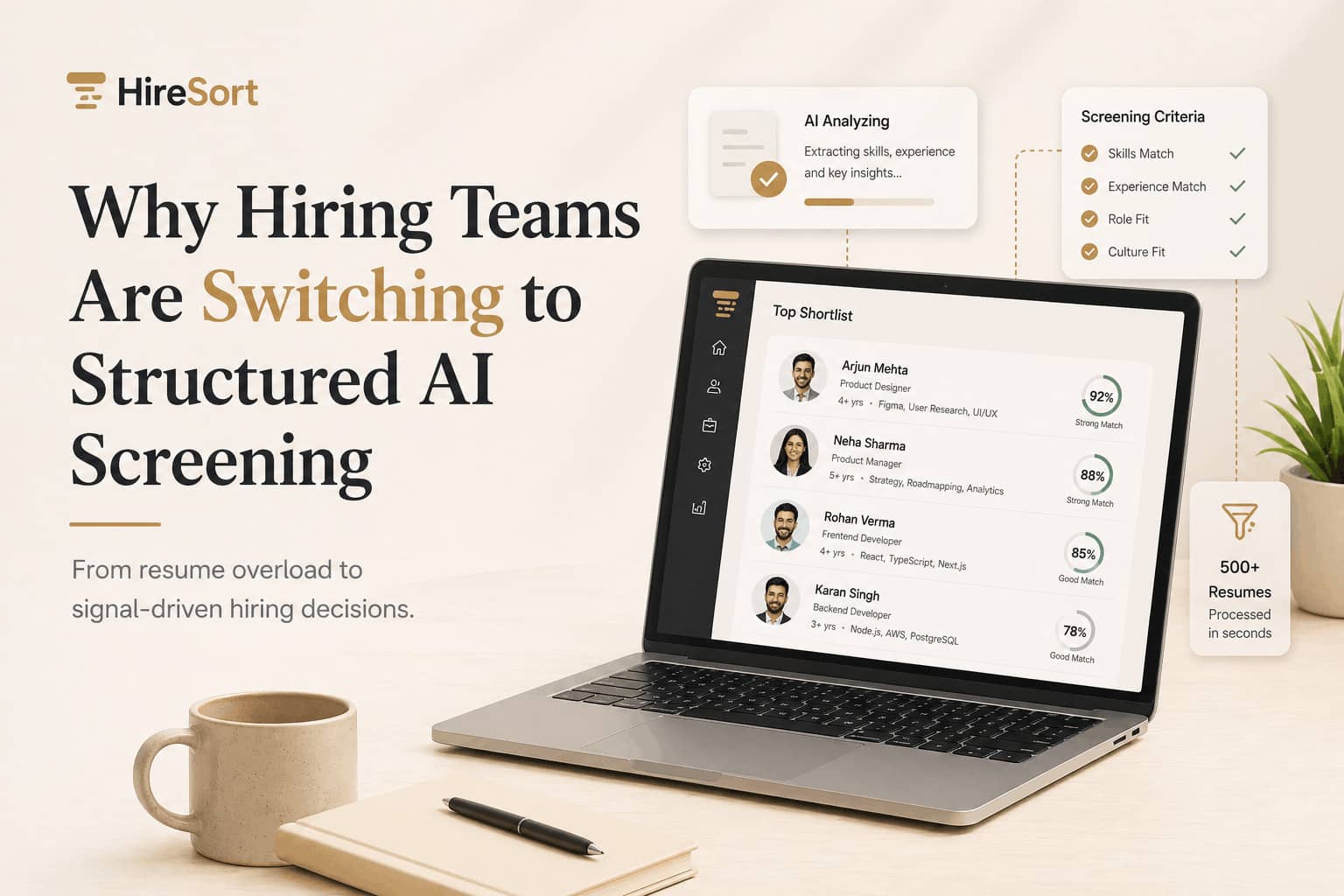
AI resume screening is most useful when it applies a structured checklist consistently. It can help extract candidate details, compare resumes against role criteria, rank candidates, and surface evidence for review.
The goal is not to remove recruiters from the process. The goal is to reduce repetitive first-pass review so recruiters spend more time on calibration, outreach, and hiring manager alignment.
How HireSort Supports Resume Screening Checklists
HireSort helps teams turn job descriptions into structured screening rubrics, apply those rubrics across resumes, and review ranked candidates with explainable scores. It connects the checklist, scorecard, and shortlist into one workflow.
Teams can use HireSort alongside resources like candidate scorecards, candidate screening software guides, and AI resume screening workflows to make the first stage of hiring faster and more consistent.
FAQ: What Should Recruiters Look for When Screening Resumes?
Recruiters should look for must-have skills, role-relevant experience, evidence of impact, seniority fit, progression, and any risks that need follow-up.
FAQ: How Do You Screen Resumes Faster?
Screen resumes faster by defining must-have criteria first, using a consistent checklist, scoring candidates against a rubric, and reserving deep review for candidates who meet the initial bar.
FAQ: Should Resume Screening Be Automated?
Resume screening can be assisted by automation, but final decisions should stay human-reviewed. AI is best used to organize evidence, rank candidates, and reduce repetitive first-pass work.