What an AI Resume Screening Tool Does and When to Use One
A practical guide to AI resume screening tools, CV shortlisting, candidate ranking, and human-reviewed hiring workflows.
What Is an AI Resume Screening Tool?
An AI resume screening tool helps recruiters evaluate resumes faster by comparing candidate profiles against a job description or screening rubric. Instead of manually opening every resume from scratch, recruiters can review ranked candidates, match scores, strengths, gaps, and evidence.
The best tools do not simply search for keywords. They help recruiters understand whether a candidate appears relevant for the role and why.
What Does an AI Resume Screening Tool Actually Do?
- Parses resumes into structured candidate information.
- Reads the job description or role requirements.
- Creates or applies a screening rubric.
- Compares each resume against the role criteria.
- Ranks candidates by likely fit.
- Highlights strengths, missing requirements, and possible risks.
- Shows evidence from the resume so recruiters can review the score.
- Helps build a shortlist for hiring manager review.
AI Resume Screening vs. Keyword Matching
Keyword matching checks whether certain words appear in a resume. AI resume screening should go further. It should look at context, related experience, seniority, role relevance, and evidence of impact.
For example, a keyword filter might miss a candidate who has relevant cloud infrastructure experience but does not use the exact phrase from the job description. A stronger AI resume screening workflow should identify related evidence and make the match explainable.
When Should You Use an AI Resume Screening Tool?
- You receive more resumes than recruiters can review quickly.
- Hiring managers complain that shortlists are inconsistent.
- Recruiters spend too much time on first-pass resume review.
- You need to compare candidates against the same criteria.
- You want evidence-based shortlists instead of vague impressions.
- You want to keep past candidates searchable and reusable.
What AI Resume Screening Should Not Do
AI should not make final hiring decisions on its own. It should not reject candidates without review, hide scoring logic, or pretend that a resume contains the full picture of a person. The safest workflow keeps recruiters and hiring managers in control.
How a CV Shortlisting Tool Fits Into the Workflow
A CV shortlisting tool is useful when recruiters need to move from a large applicant pool to a smaller reviewable list. The tool should help identify candidates who meet the role requirements, but it should also explain why they were shortlisted.
The output should be a ranked shortlist, not a black-box decision. Recruiters should be able to open each candidate, review the resume evidence, and decide whether the score makes sense.
What to Look for in AI Resume Screening Software
- Rubric-based screening tied to the job description.
- Explainable candidate scores with evidence.
- Bulk resume upload and processing.
- Editable criteria so recruiters can calibrate the screen.
- Candidate ranking and shortlist review.
- Resume parsing and structured candidate records.
- Human override and final decision control.
- Internal links between screening results, candidate records, and pipeline stages.
How HireSort Approaches AI Resume Screening
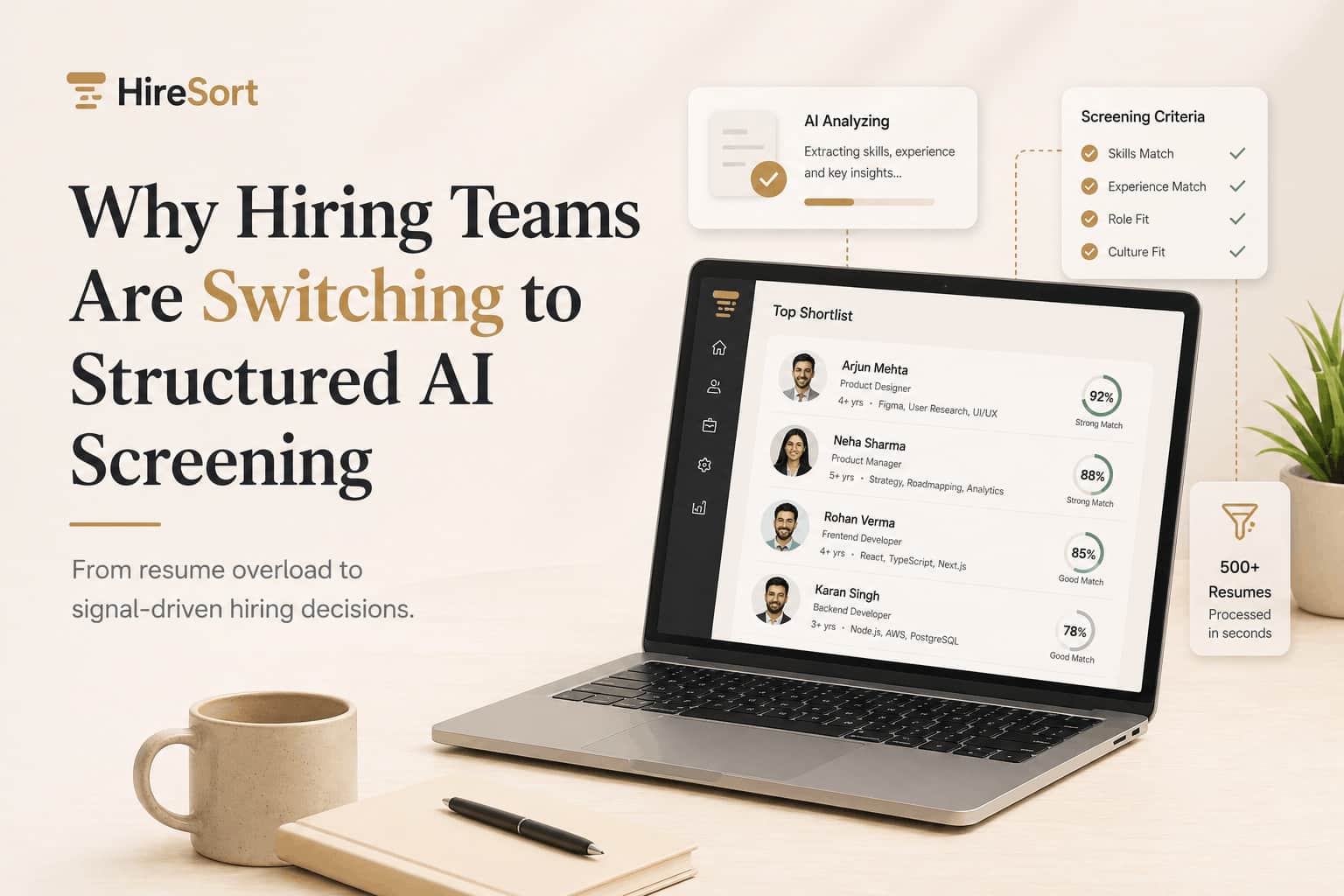
HireSort is built around the resume screening bottleneck. Recruiters upload resumes, define the role, review a structured rubric, and get ranked candidates with explainable scores. The goal is to help teams shortlist faster without removing human judgment.
HireSort also connects screening to candidate management, so resumes can become reusable candidate records instead of one-off files.
FAQ: Is AI Resume Screening Accurate?
Accuracy depends on the quality of the job criteria, resume data, and review workflow. AI screening is most useful when it is rubric-based, explainable, and reviewed by recruiters.
FAQ: Can AI Shortlist Candidates Automatically?
AI can help produce a ranked shortlist, but recruiters should review the evidence before making decisions. Human oversight is especially important for fairness, context, and final judgment.
FAQ: What Is the Difference Between an AI Resume Screening Tool and an ATS?
An ATS manages applications and hiring stages. An AI resume screening tool focuses on evaluating resumes and ranking candidates. Some teams use both together; HireSort focuses on screening-first candidate management.